
Key Takeaways
- Adoption is the Ultimate Metric: Buying expensive software doesn’t fix a broken process if the people on the plant floor refuse to use it.
- Environment Matters: Plant floors aren’t quiet offices. Mobile procurement apps must be built for heavy gloves, Wi-Fi dead zones, and high-pressure environments.
- Bad Data Kills Trust: If your item master is a mess, a mobile search will fail, and technicians will abandon the app on day one.
- The Cost of “Shelfware”: Failed technology rollouts waste capital and erode trust, while a successful implementation can reduce hidden supply chain costs by 15-30%.
- Process Precedes Technology: You cannot digitize a chaotic storeroom. You must clean your data and organize your physical workflows before introducing a digital interface.
You just signed the contract for a shiny new procurement app. The projected ROI looks incredible on paper. You expect streamlined operations, total spend visibility, and lightning-fast purchasing.
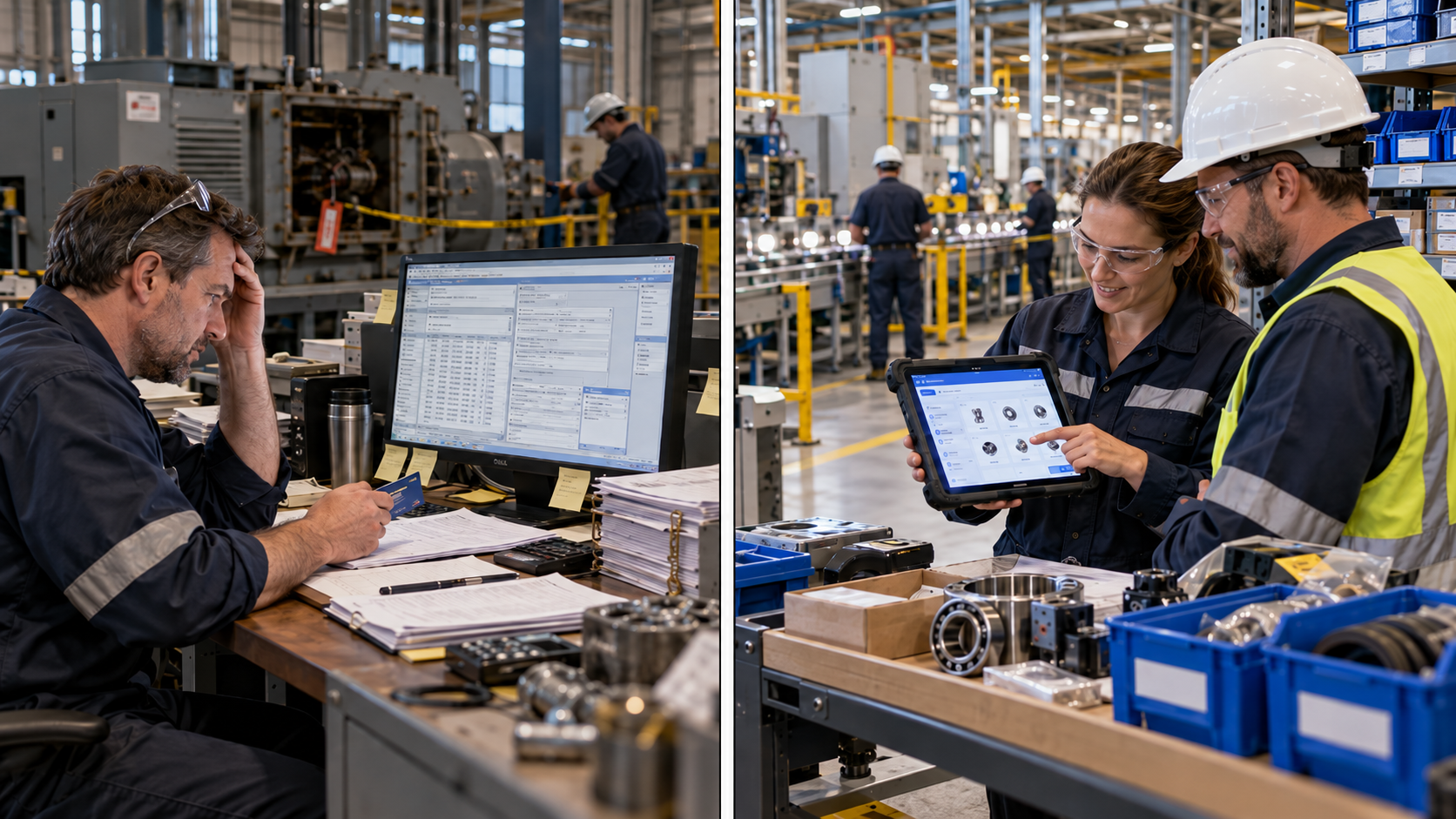
Fast forward six months: your maintenance technicians are still calling in orders, using paper forms, or hoarding parts in secret stashes. The expensive new software? It’s become expensive “shelfware.”
This is the brutal reality of many supply chain technology implementations. Buying software doesn’t fix a broken process if the people on the floor refuse to use it. We understand how incredibly frustrating it is to invest your budget into a solution that ultimately creates more friction than it removes.
At SDI, we believe technology should empower your team, not slow them down. Based on decades of experience optimizing MRO (Maintenance, Repair, and Operations), here is the radically transparent truth about why mobile procurement technology fails—and exactly how you can prevent it.
1. It’s Built for the Office, Not the Plant Floor
Many procurement apps are designed by software engineers sitting in quiet, climate-controlled offices. But your technicians are on the plant floor. They are wearing heavy gloves, working in tight spaces, and dealing with loud, high-pressure environments.
If a mobile app requires ten clicks, intricate typing, or navigating tiny menus just to order a replacement bearing, procurement app adoption will flatline on day one.
The Fix: Demand consumer-grade simplicity. The UI must be as intuitive as ordering from Amazon. Look for barcode scanning, voice-to-text capabilities, and large, glove-friendly buttons. If it takes more than three taps to reorder a critical spare part, the software is working against you.
2. The Wi-Fi Black Hole
This is the hidden killer of mobile MRO purchasing. Your manufacturing plant, hospital basement, or university facility likely has dead zones where cellular service and Wi-Fi simply do not exist.
If your procurement app requires a constant cloud connection to function, technicians will abandon it the second they lose a signal while standing next to a broken boiler.
The Fix: Your mobile technology must have robust offline capabilities. Technicians need the ability to scan, request, and document items while disconnected, with the app automatically syncing to your core system the moment they walk back into a connected zone.
3. Digitizing a Broken Process
Technology is an accelerator. If you have an efficient process, technology makes it faster. If you have a broken, chaotic process, technology just helps you make mistakes at scale.
Slapping a mobile interface over convoluted approval workflows, misaligned inventory strategies, or bad storeroom layouts guarantees procurement software failure.
The Fix: Fix the process before you implement the tech. Audit your MRO supply chain first. Streamline your approval routing and physically organize your storeroom so the digital workflow matches the physical reality of the job.
4. Dirty MRO Data
Imagine a technician searching the new app for a “1/2 inch ball valve.” The search returns 14 different results, half of them lacking descriptions, some listed as “VALVE-BALL-.5” and others completely miscategorized.
Frustrated and unsure which part is actually in the crib, the technician gives up and walks to the storeroom to hunt for it manually. Bad data destroys trust. If they can’t trust the app to give them accurate inventory counts and clean item descriptions, they won’t use it.
The Fix: Data cleansing is non-negotiable. Before rolling out a mobile tool, you must standardize your item master. Clean, enriched data ensures that when a tech searches for a part, they find the exact item, its location, and its real-time availability instantly.
5. Ignoring Change Management
Change is hard. If you roll out new technology by simply sending a company-wide email and a PDF manual, you are setting your team up for failure. Technicians will view the new software as just another corporate mandate designed to track their every move.
The Fix: Answer the “What’s in it for me?” immediately. Show your technicians how this tool eliminates the most annoying parts of their day—like walking across a 500,000-square-foot facility just to check if a motor is in stock. Involve key floor leaders early in the pilot phase so they become advocates for the technology, not adversaries.
The Path to Effortless Adoption
You shouldn’t have to force your team to use technology. It should be so helpful that they can’t imagine working without it. That is why SDI built the ZEUS platform—a mobile-enabled supply chain ecosystem purpose-built for the realities of the technician’s daily life.
We act as your guide to ensure your implementation actually drives value. Here is how easy it is to partner with us:
- Assess the Reality: We conduct a deep-dive audit of your physical workflows, data health, and current technology gaps.
- Cleanse & Configure: We normalize your MRO data and deploy the ZEUS platform, customized for your specific operational environment (offline capabilities included).
- Drive Adoption: We lead the change management process with your floor teams, ensuring rapid adoption and immediate efficiency gains.
FAQs
How much does a mobile MRO procurement implementation actually cost?
The initial cost varies based on the size of your facility, the number of users, and the current state of your MRO data. However, the true cost conversation should focus on ROI. Implementing a purpose-built system like ZEUS typically pays for itself by reducing rogue spend, eliminating obsolete inventory, and cutting overall MRO supply chain costs by 15-30%. The most expensive software is the software your team refuses to use.
Should we build a custom procurement app in-house or outsource it?
If your core competency is manufacturing or facility management, building and maintaining custom software is a massive distraction for your IT department. Outsourcing to an MRO expert gives you immediate access to specialized supply chain algorithms, continuous updates, and $1B+ in collective buying power, allowing your team to focus strictly on production and uptime.
What are the biggest problems with supply chain technology integration?
The most common point of failure is digitizing a mess. If your physical storeroom is unorganized and your item master is full of duplicate or incomplete data, integrating new technology will only scale the chaos. You must perform a physical audit and execute master data management before introducing a digital interface.
What makes SDI’s ZEUS platform different from standard ERP mobile apps?
Standard ERP apps are built for accountants and back-office procurement teams, not field technicians. ZEUS is engineered specifically for the plant floor. It features a consumer-grade user interface, heavy-glove friendly navigation, robust offline sync for Wi-Fi black holes, and clean MRO data integration that empowers technicians to find exactly what they need in seconds.
The Stakes Are High
Do not let your next technology rollout result in wasted budget, frustrated technicians, and operational standstills. When you implement a mobile strategy built around the actual needs of the end-user, you maximize asset uptime, eliminate rogue spending, and can reduce hidden supply chain costs by 15-30%.
Are you ready to see how a purpose-built mobile procurement strategy can transform your plant floor?
Schedule a Supply Chain Assessment today to start identifying where your current MRO processes are leaking capital.